

About Make Your Own Recipes
My Cooking Philosophy: No Oil, Wheat, or Refined Sugar
I believe healthy eating shouldn’t mean giving up the foods you love. It’s about changing how you make them. That’s why my recipes focus on minimally processed, nutrient-dense ingredients without oil, wheat, or refined sugar. My goal is to make healthy eating practical, satisfying, and sustainable.
Why I Don’t Cook With Oil
While some oils, like extra-virgin olive oil, are healthier than others, I prefer getting my fats from whole foods like nuts, seeds, and avocados.
Oil is 100% fat, containing approximately 120 calories per tablespoon, with no fiber and fewer nutrients than the foods it’s extracted from. Whole-food fats provide fiber, protein, antioxidants, vitamins, and minerals.
People often tell me that our bodies need healthy fats. I agree, and the healthiest fats are the polyunsaturated fats found in walnuts, flaxseeds and other nuts and seeds. Using ingredients like cashews, walnuts, and tahini, I can create rich, creamy textures and delicious flavors while adding more nutritional value than using oil.
Why I Avoid Wheat
My decision to avoid wheat is largely about replacing refined flours with more nutrient-dense alternatives.
Refining wheat removes much of its fiber, vitamins, minerals, and beneficial plant compounds, leaving mostly starch that digests quickly, which can cause sharper blood sugar spikes.
Instead, I use ingredients like rolled and steel cut oats, millet, quinoa, and almond flour. These flours are unrefined, and provide nutritional variety while allowing me to recreate everything from breads and pancakes to cookies and cakes.
Why I Sweeten With Dates
Refined sugar provides calories without fiber or significant nutritional benefits. Excess consumption can contribute to weight gain, diabetes, inflammation, and other metabolic health problems.
Dates are my preferred alternative because they’re a whole food containing fiber, potassium, and antioxidants. Their fiber helps moderate sugar absorption, although portions still matter. I use whole dates and homemade date paste to naturally sweeten desserts, sauces, and more.
What About Salt?
I don’t add table salt to my personal food, but since nearly everyone does use it, I include an optional suggested amount to add to my recipes to make it palatable for most. If you are salt free, you can simply omit the salt from any of my recipes. If you are looking to reduce your table salt intake, I suggest trying potassium chloride to replace salt on your food.
My philosophy is simple: Don’t change what you eat—change how you make it. By choosing minimally processed ingredients and eliminating certain problematic ones, we can enjoy familiar foods while making every bite more nourishing.
About Javant Benton
Javant’s health journey began nearly 20 years ago. He was prediabetic, prehypertensive, and facing a very serious personal health scare that inspired him to discover the transformative power of nutrition. He improved his diet, lost 80 pounds, and continued nourishing his way to better health. Following years of dedicated self study and research, Javant became certified through Dr. Fuhrman’s Nutritarian Education Institute as a coach and cook.

In 2022, Javant launched @HealthyVeganEating, an online platform where he shares health information and plant-based recipes designed to empower others on their wellness journeys. All of his recipes are minimally processed, and completely free of oil, wheat, and refined sugar.
In 2025, Javant launched the Healthy Vegan Lifestyle App—a tool designed to support people on their health journeys by focusing on what he calls “the four pillars of health”: a nutritious diet, regular exercise, healthy sleep habits, and a positive mindset.
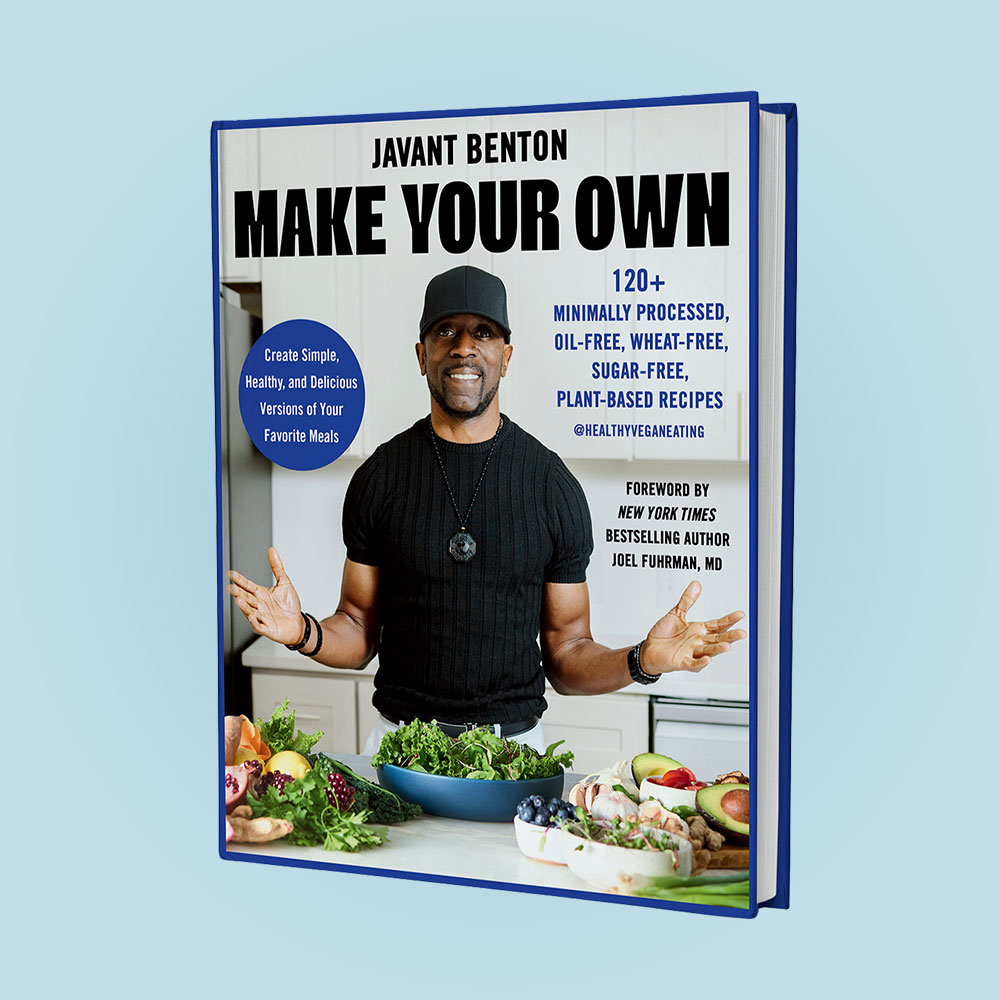
Javant’s first cookbook, Make Your Own, shares over 120 whole food, plant-based recipes. Make Your Own is now available everywhere books are sold!