
Gluten-Free Quinoa Bagels Without Yeast
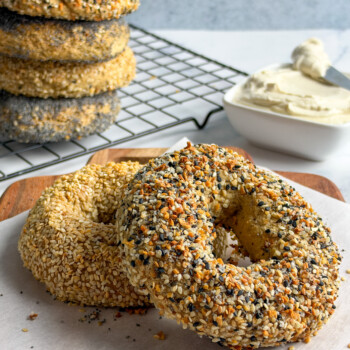
Quinoa bagels are easy, yeast-free bagels that offer an alternative to conventional bagels. Whole psyllium husks bind the dough and help create a good texture in these gluten-free bagels.
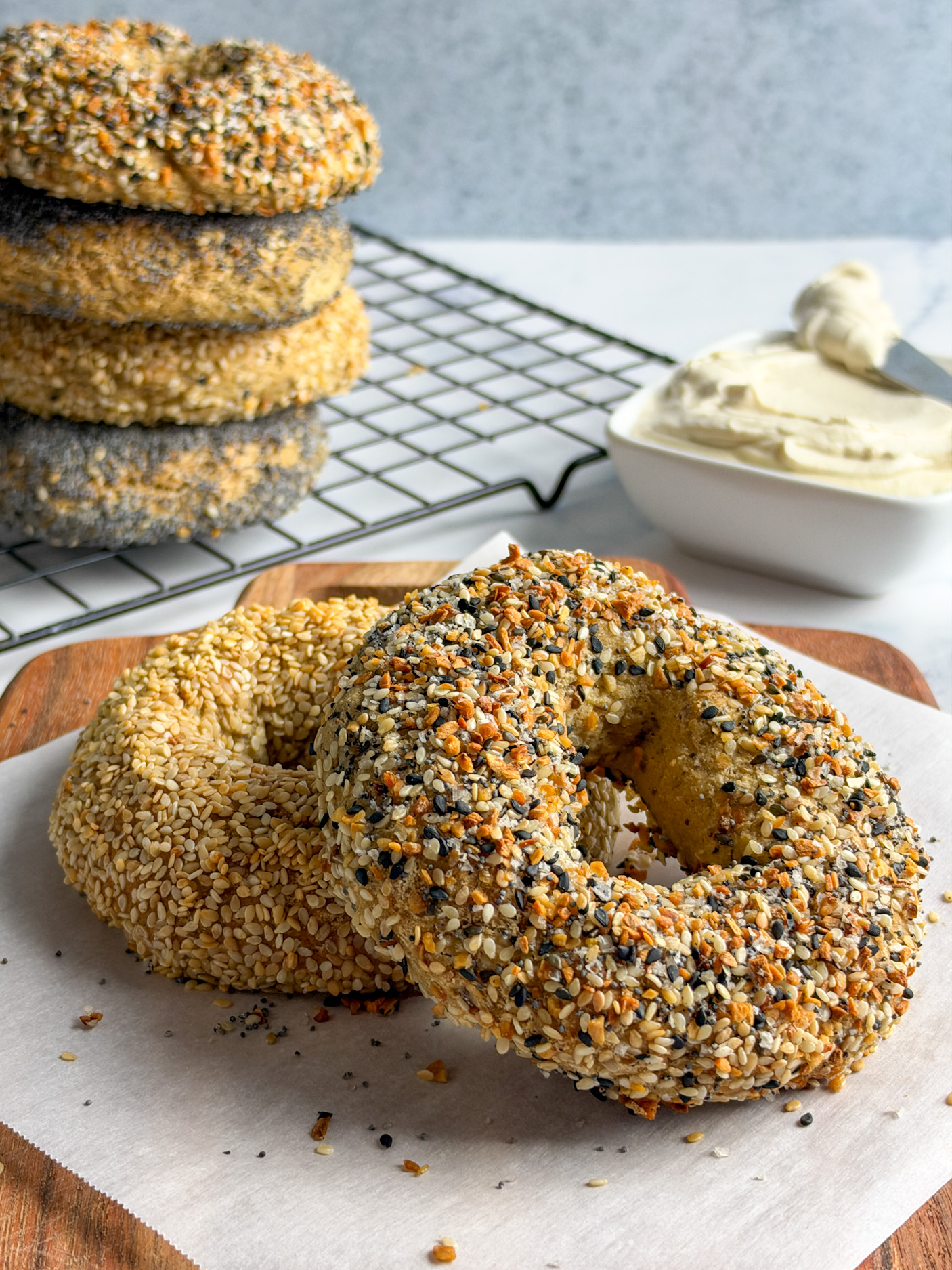
A Simple Homemade Bagel Without Wheat
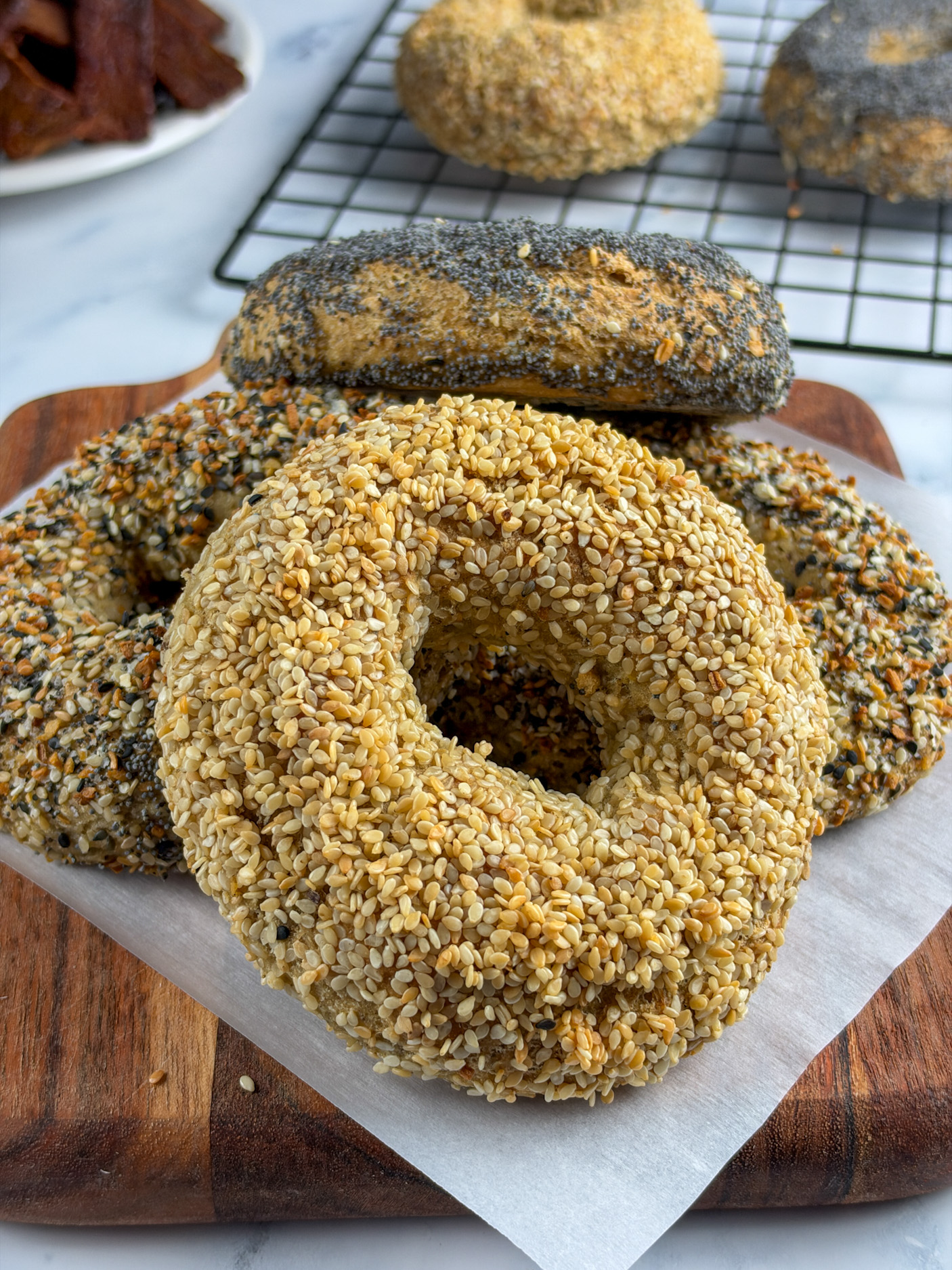
I love that these bagels do not require yeast, boiling, kneading, or rising. You simply make a psyllium gel, combine it with the quinoa flour mixture, shape the dough, and bake. I like making a few different toppings in the same batch so everyone can choose a favorite.
The most important part comes after baking: let the bagels cool completely before cutting them. That resting time allows the bagel to finish setting and gives you a much better texture.
Javant’s Health Tips
Quinoa flour is made from the whole seed and naturally contains no gluten. Unlike refined wheat flour, which has the bran and germ removed, quinoa flour retains fiber, protein, minerals, and naturally occurring plant compounds.
Research on quinoa-enriched breads suggests quinoa flour may produce a lower glycemic response than refined-wheat bread in some formulations, although the full recipe, portion, and individual response still matter.
These bagels also include flax or chia and psyllium, adding more fiber than a conventional refined-flour bagel.
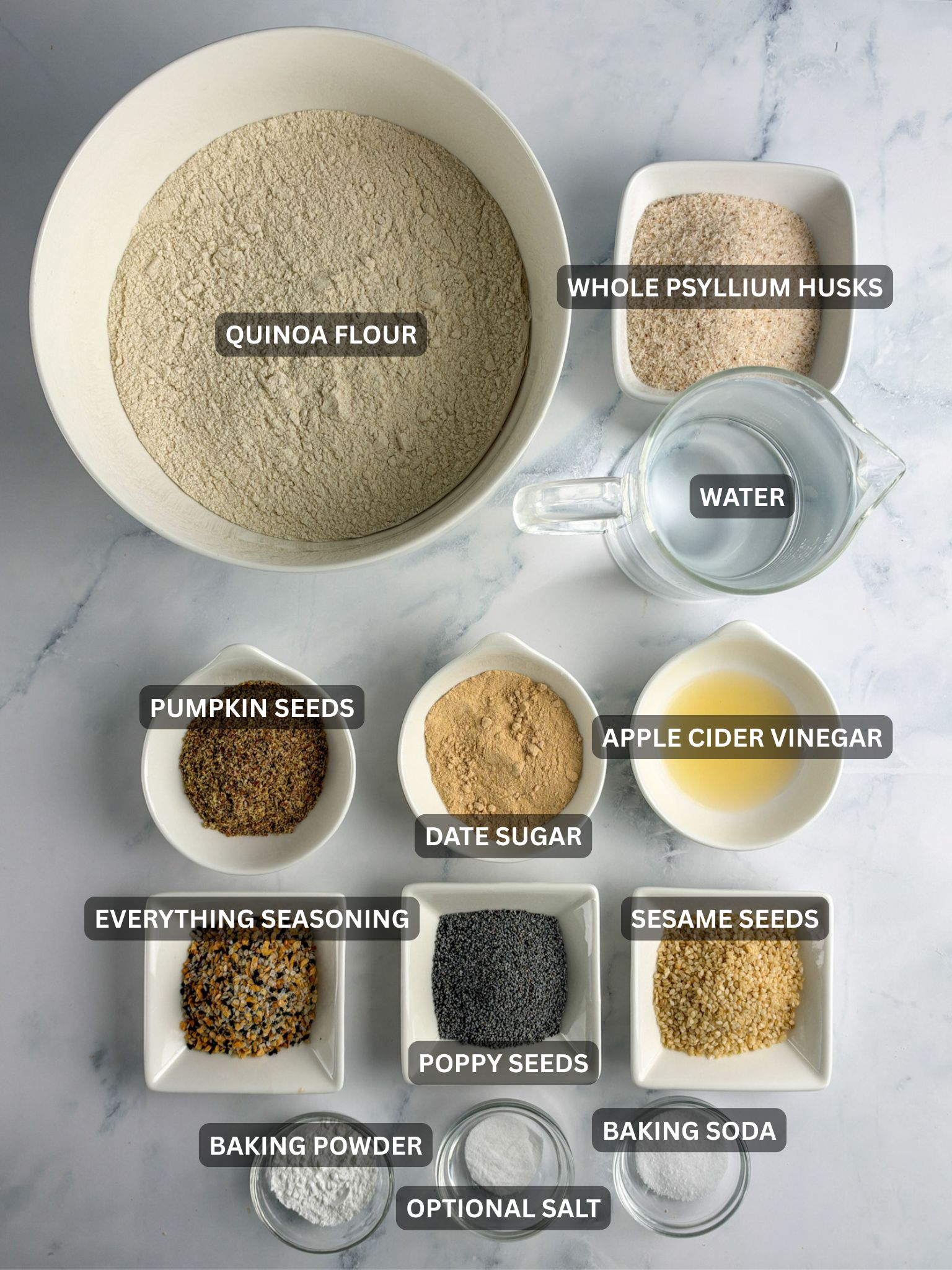
Key Ingredients and Substitutions
- Quinoa flour – This naturally gluten-free whole-seed flour gives the bagels their base and distinctive flavor. I do not recommend substituting another flour without retesting the amount of water.
- Whole psyllium husks – These bind and structure the dough in the absence of gluten. Use whole husks, not psyllium powder, as powder absorbs water differently and can make the bagels gummy.
- Ground flax or chia – Either option supports the structure and adds fiber. Use ground seeds so they hydrate evenly.
- Date sugar – This adds mild sweetness using whole dried dates. It may be omitted for a more savory bagel.
- Toppings – Use sesame seeds, poppy seeds, everything seasoning, or a combination. Check seasoning blends for added salt if sodium is a concern.
Make Your Own Quinoa Bagels
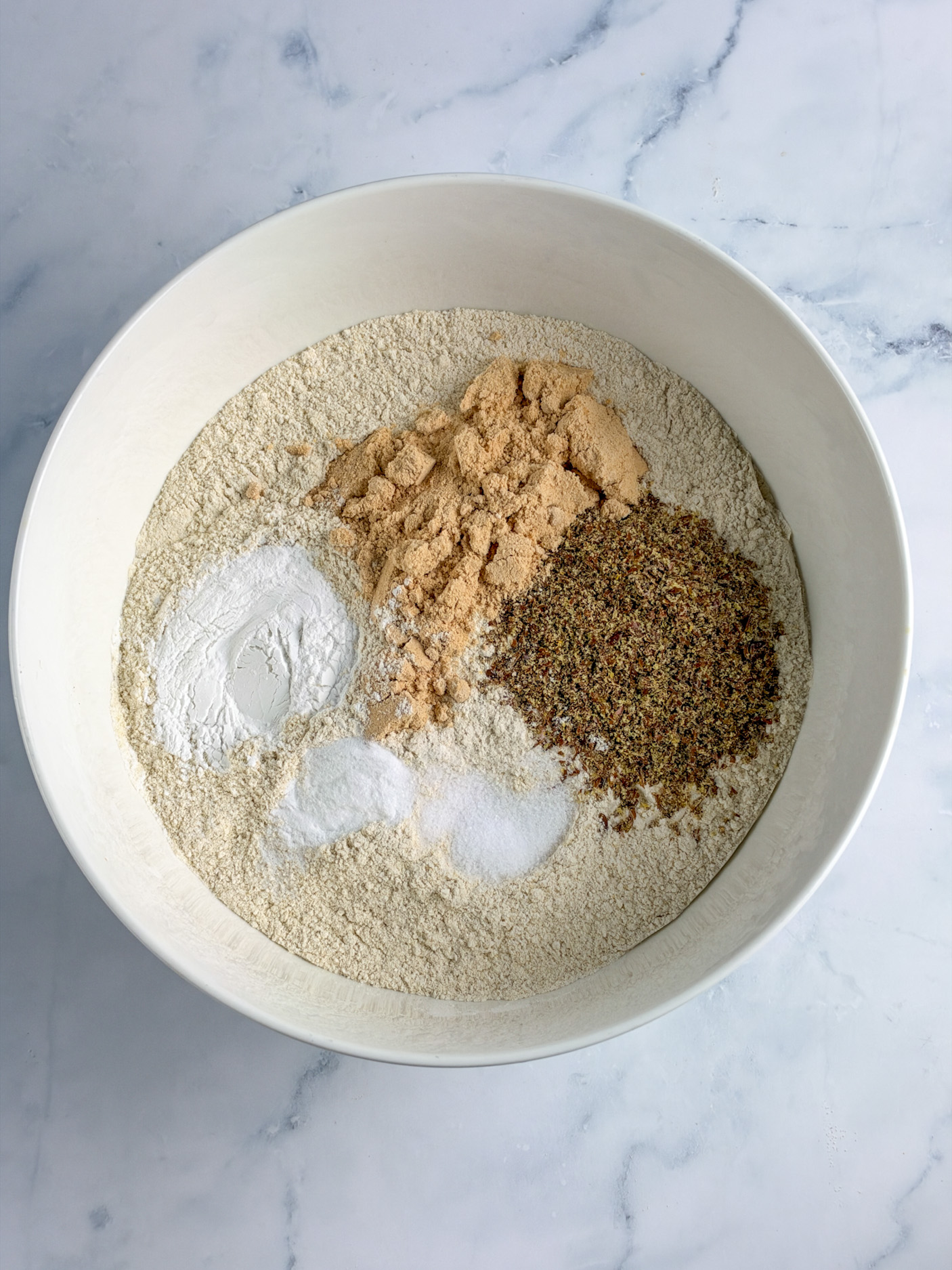
1. Combine the dry ingredients, keeping the psyllium husks separate.
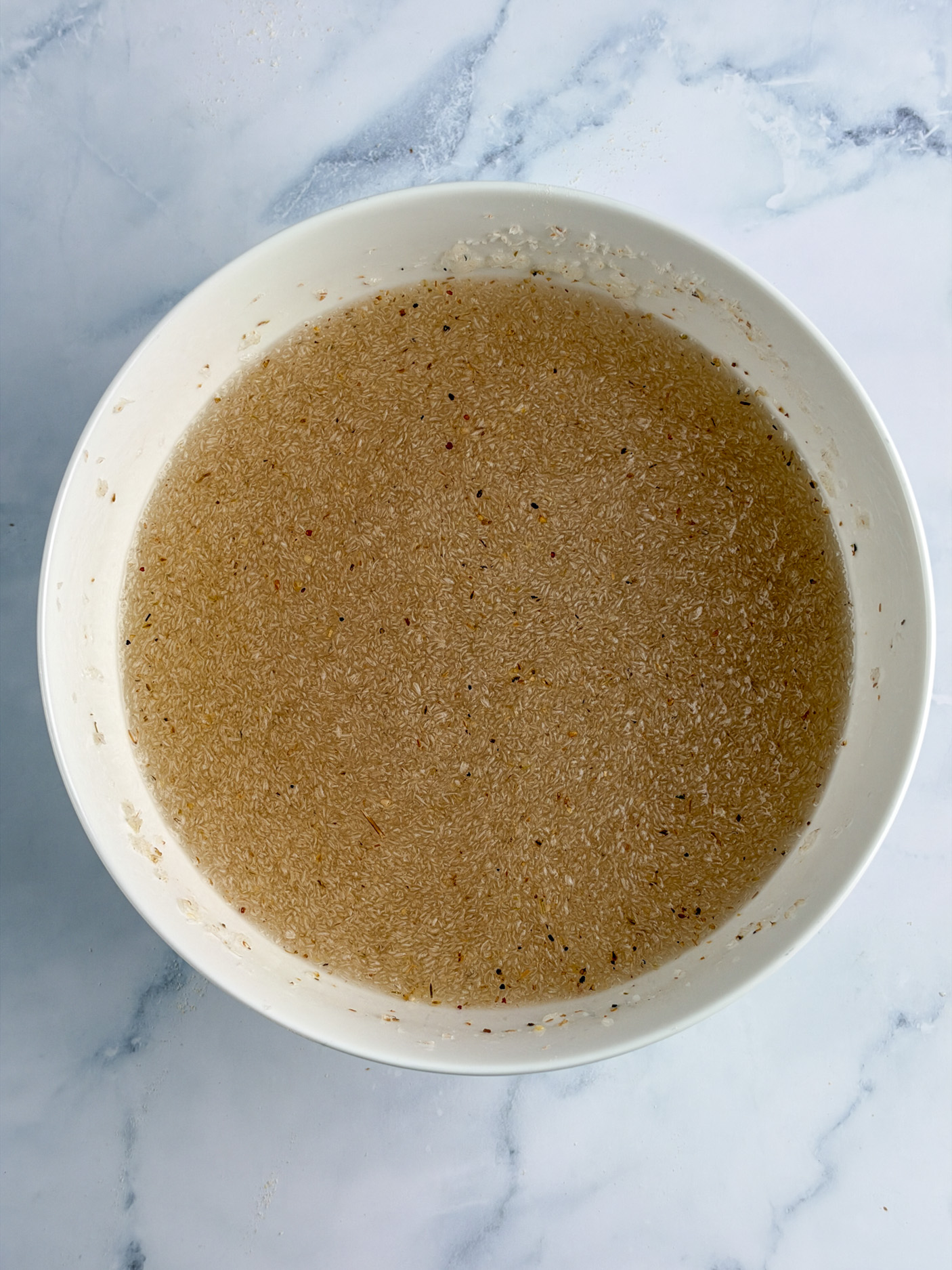
2. Make the psyllium gel. Mix the water, apple cider vinegar, and whole psyllium husks. Let the mixture rest until it forms a thick gel.
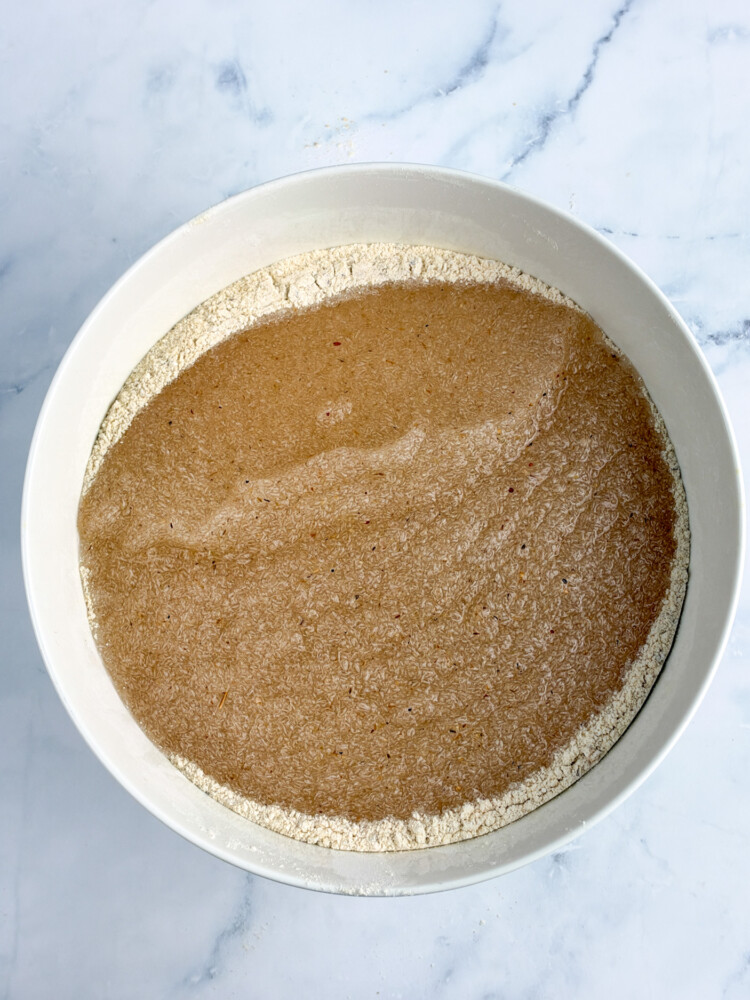
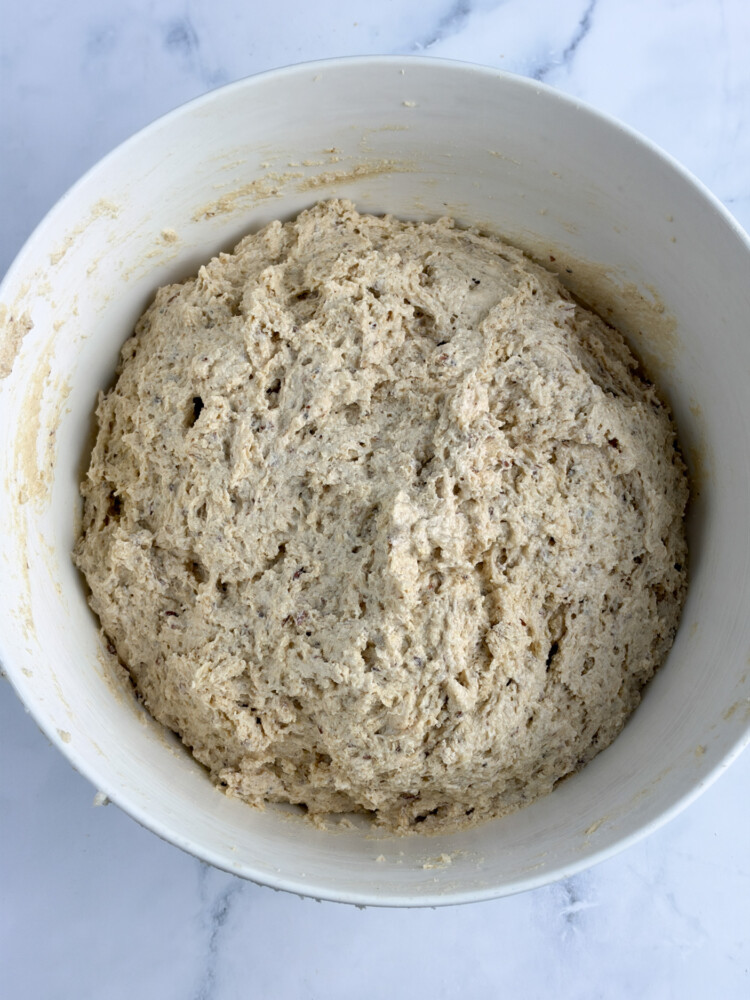
3. Make the dough. Mix the psyllium gel into the dry ingredients to form the dough.
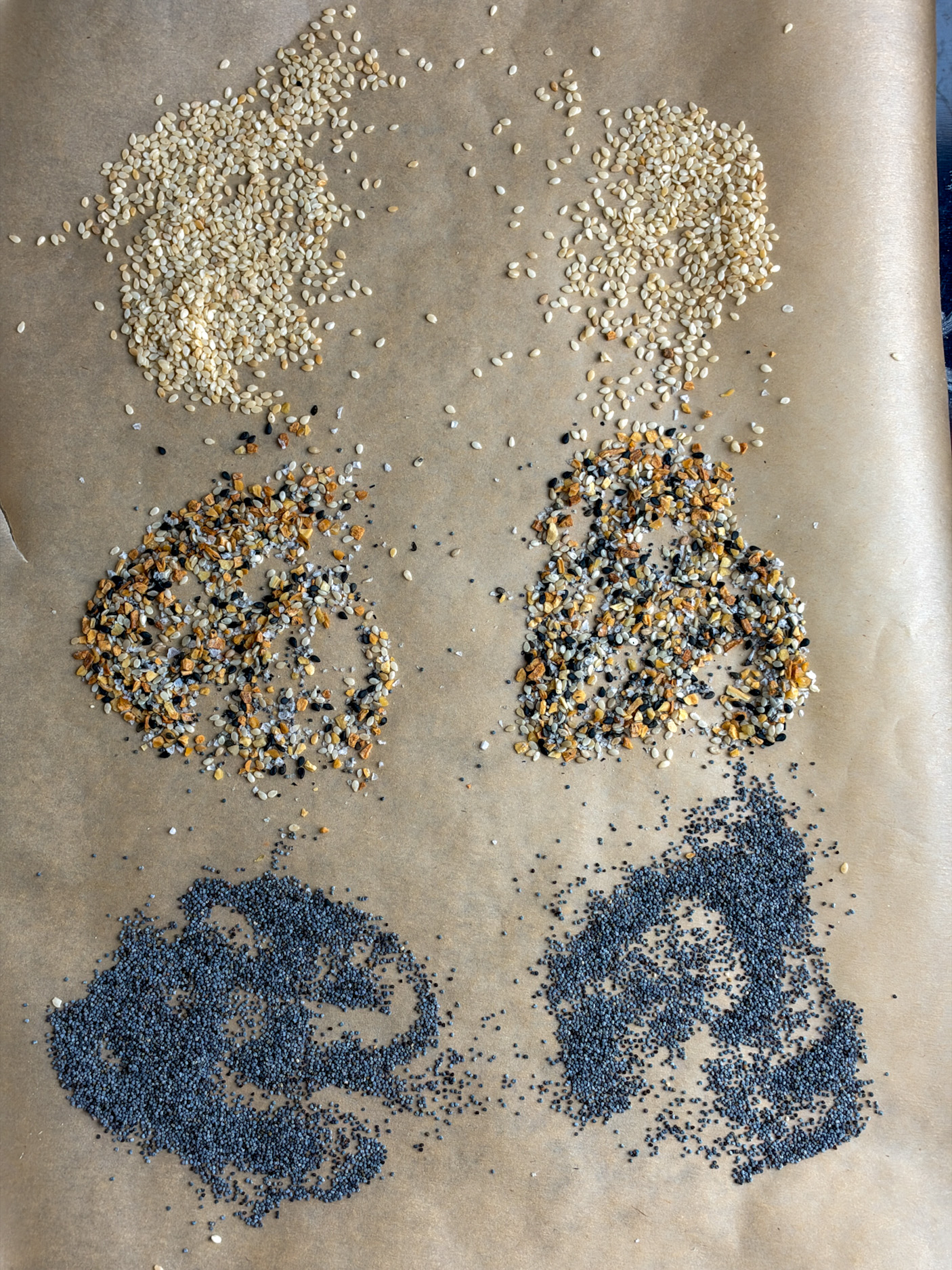
4. Add the bottom toppings. Place toppings in sections on the parchment-lined baking sheet.
5. Divide the dough into six equal portions with wet hands and place them on the toppings.
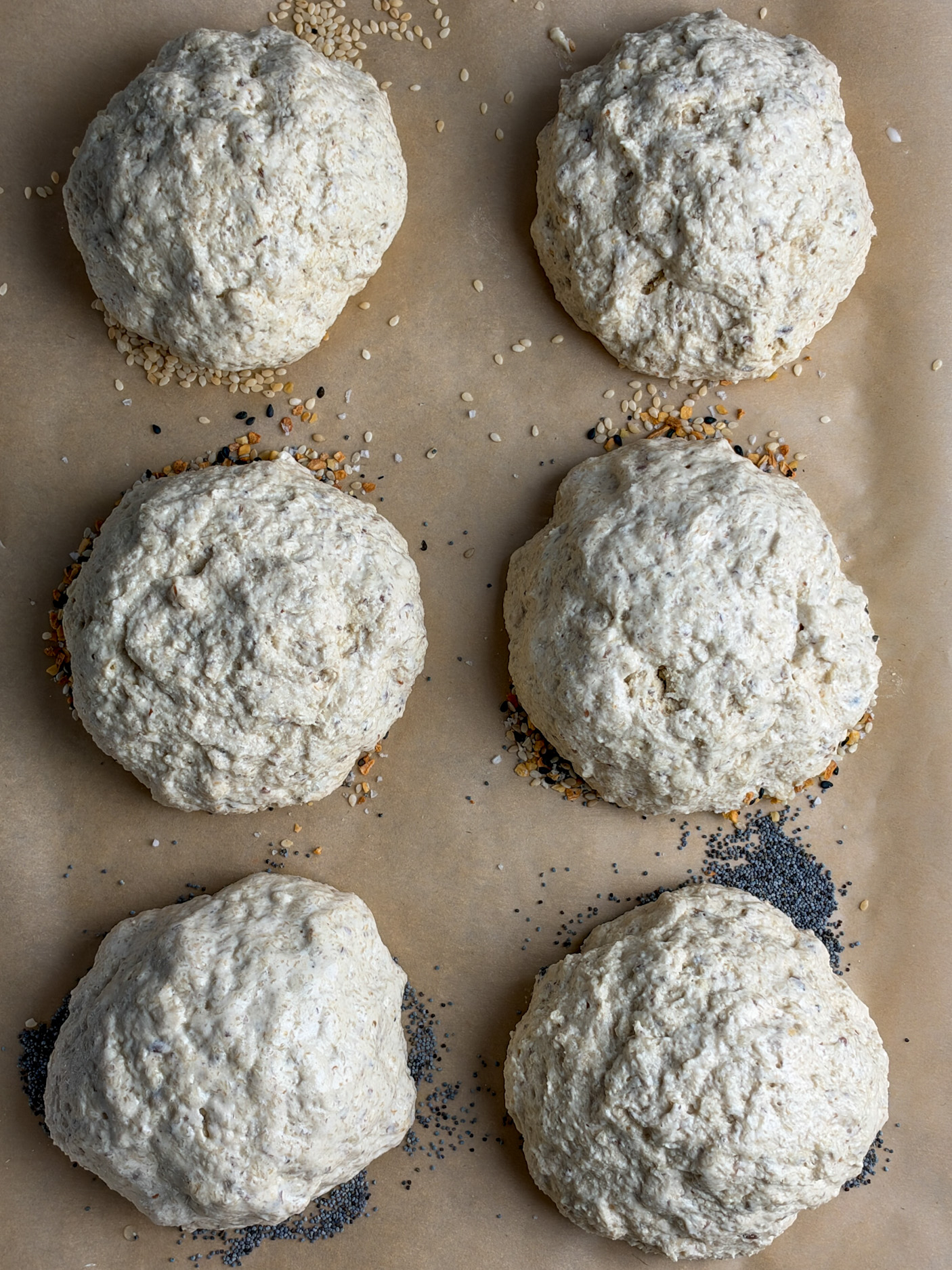
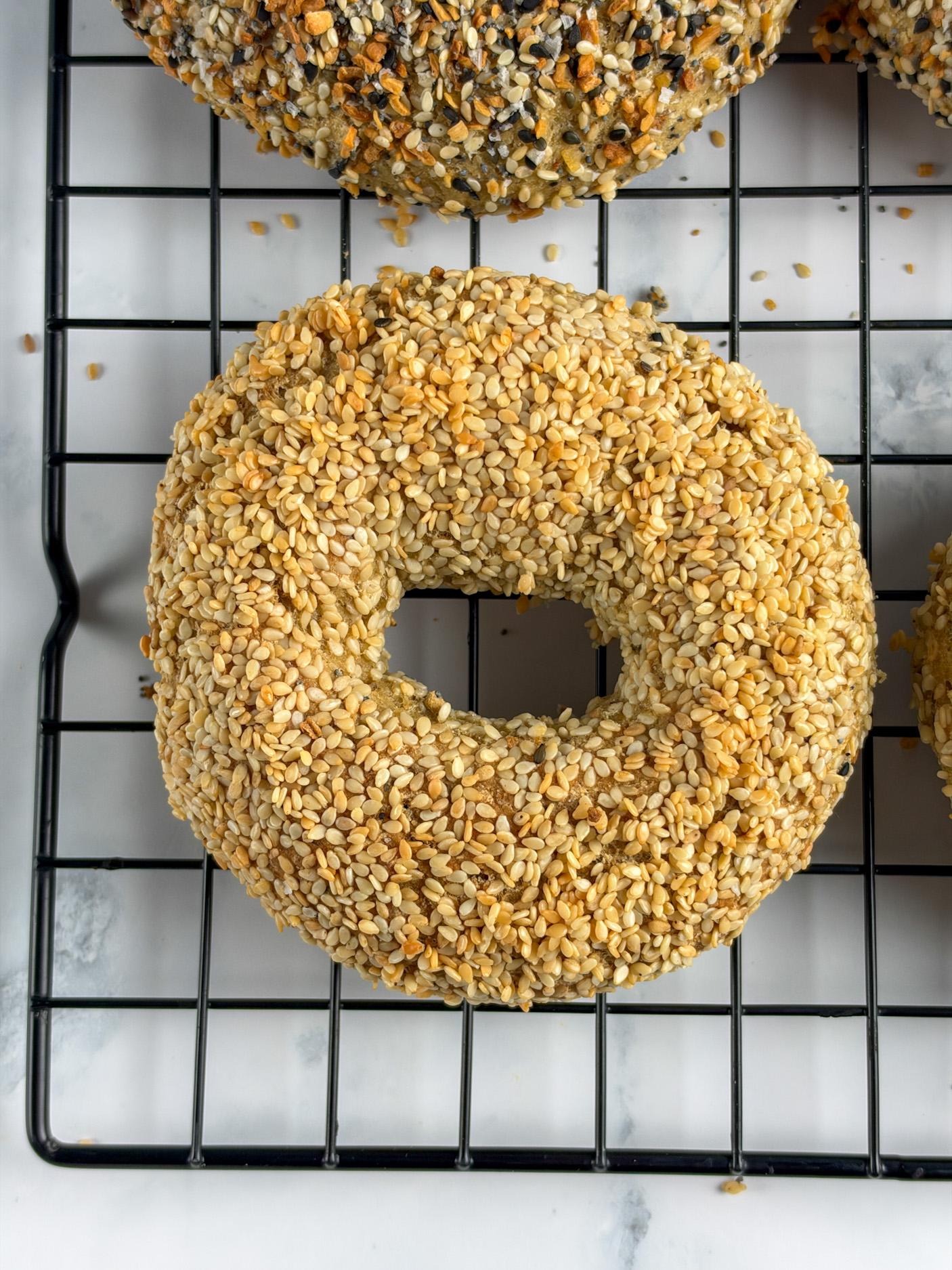
6. Shape into bagels and add more toppings. Form a hole in each portion and shape it into a bagel. Coat the bagels generously with the toppings as desired.
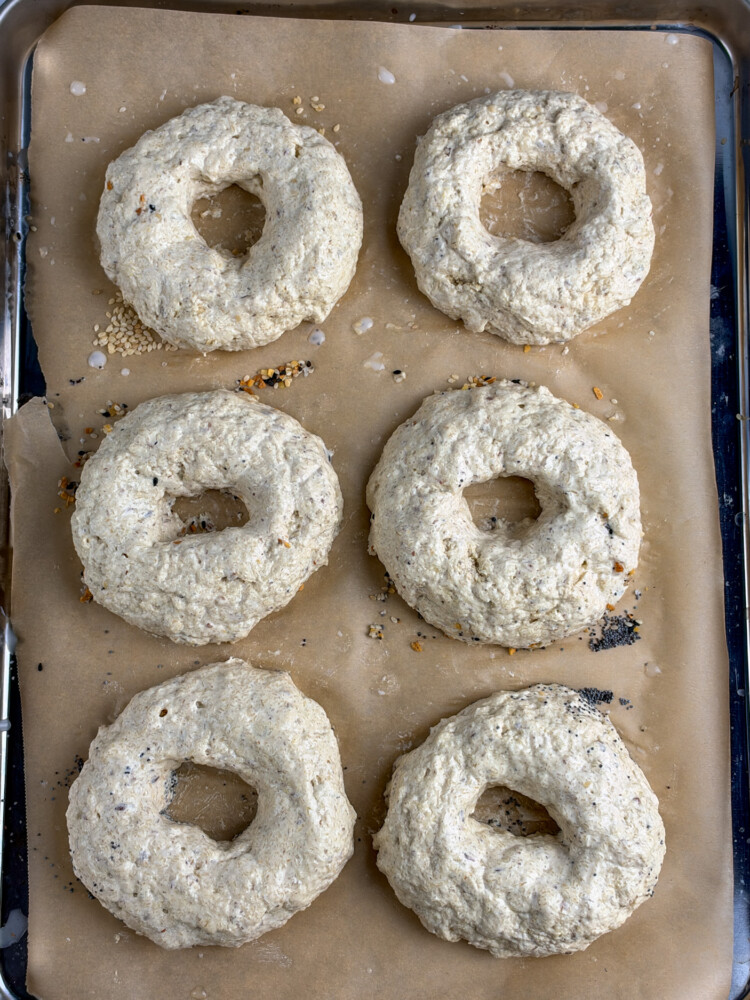
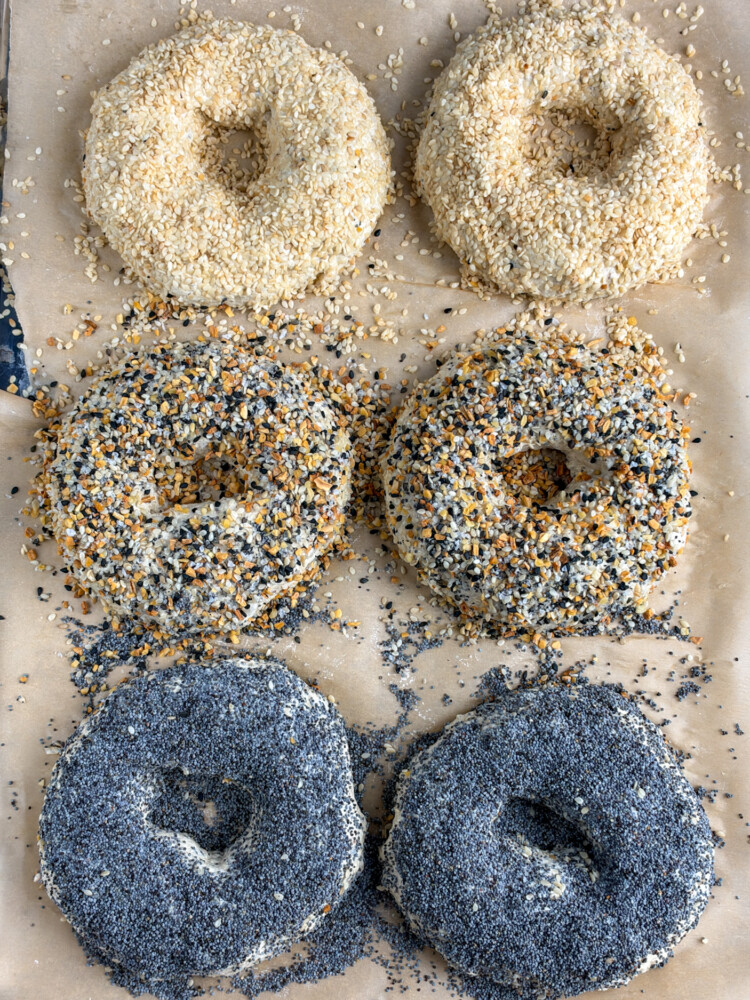
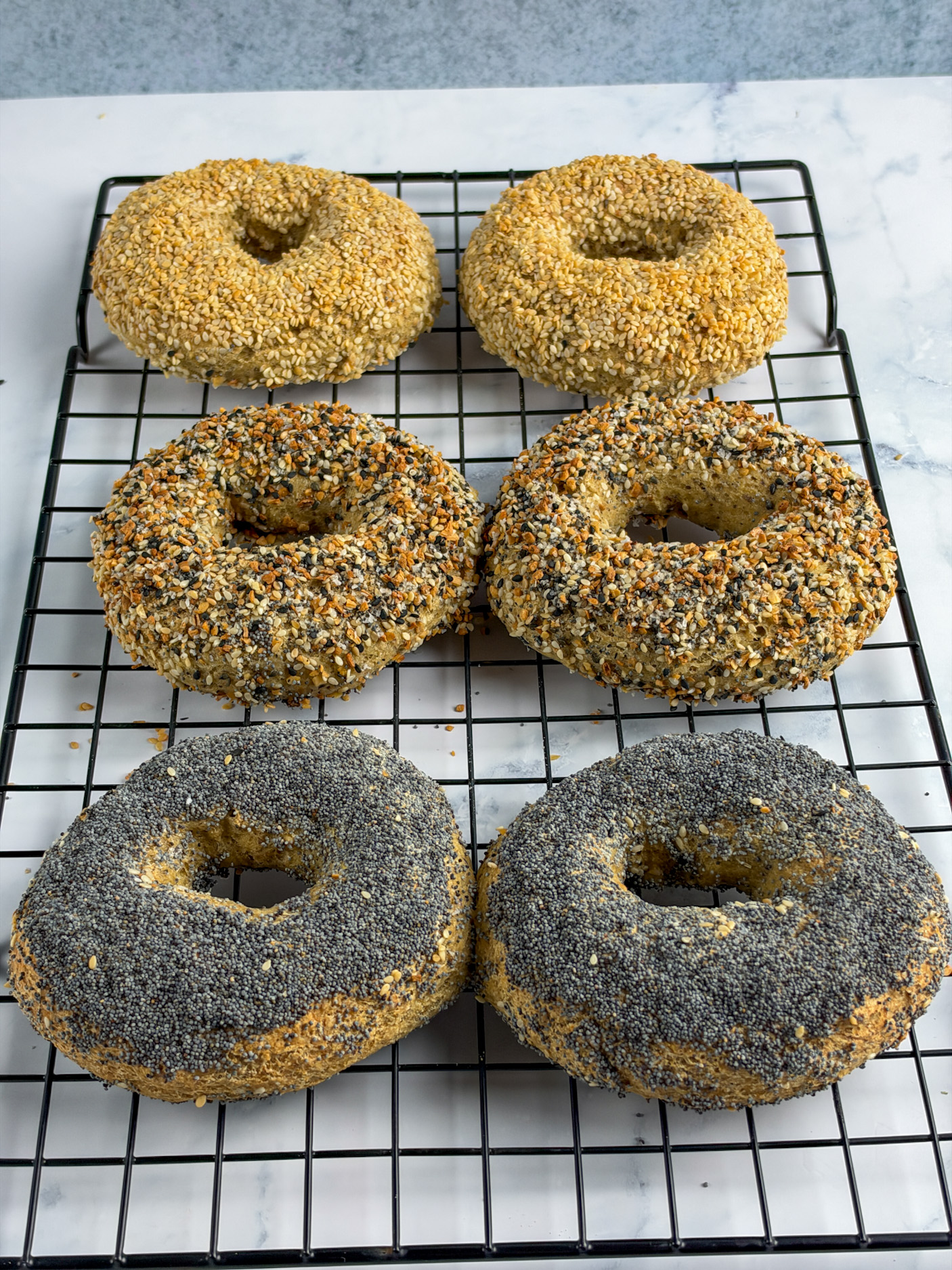
7. Bake until lightly golden and firm. Cool the bagels completely before slicing.
Keys to Making Great Quinoa Flour Bagels
- Use whole psyllium husks. Psyllium powder behaves differently and may create a dense, gummy interior.
- Let the gel develop. Rest the psyllium mixture for the full five minutes so it can thicken and bind the dough.
- Add extra water cautiously. Only add a small amount if dry flour remains and the dough will not come together.
- Cool completely before cutting. This is essential. The bagels continue setting as they cool. Slicing them warm can make the centers gummy or cause them to compress.
Storing and Reheating
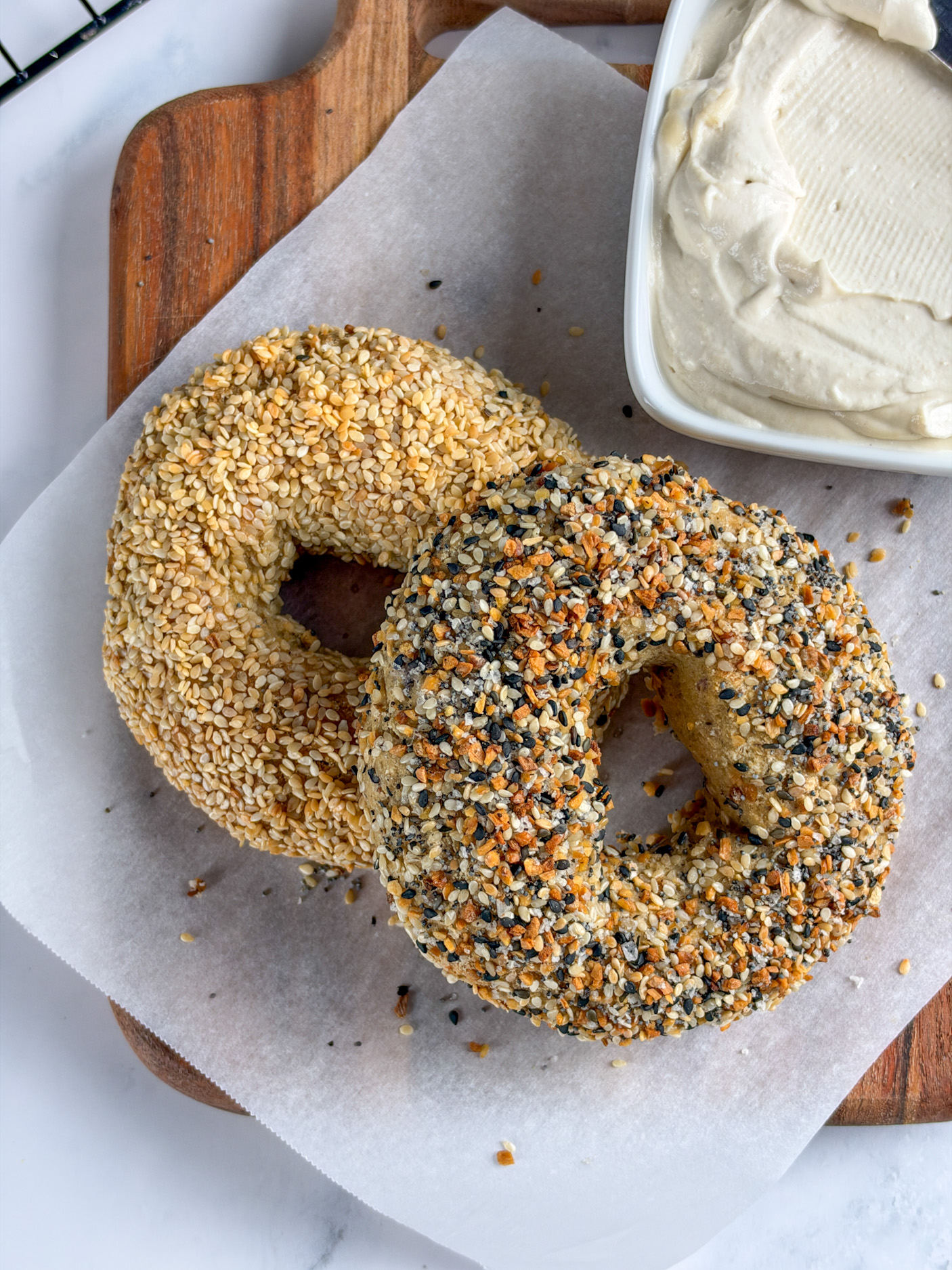
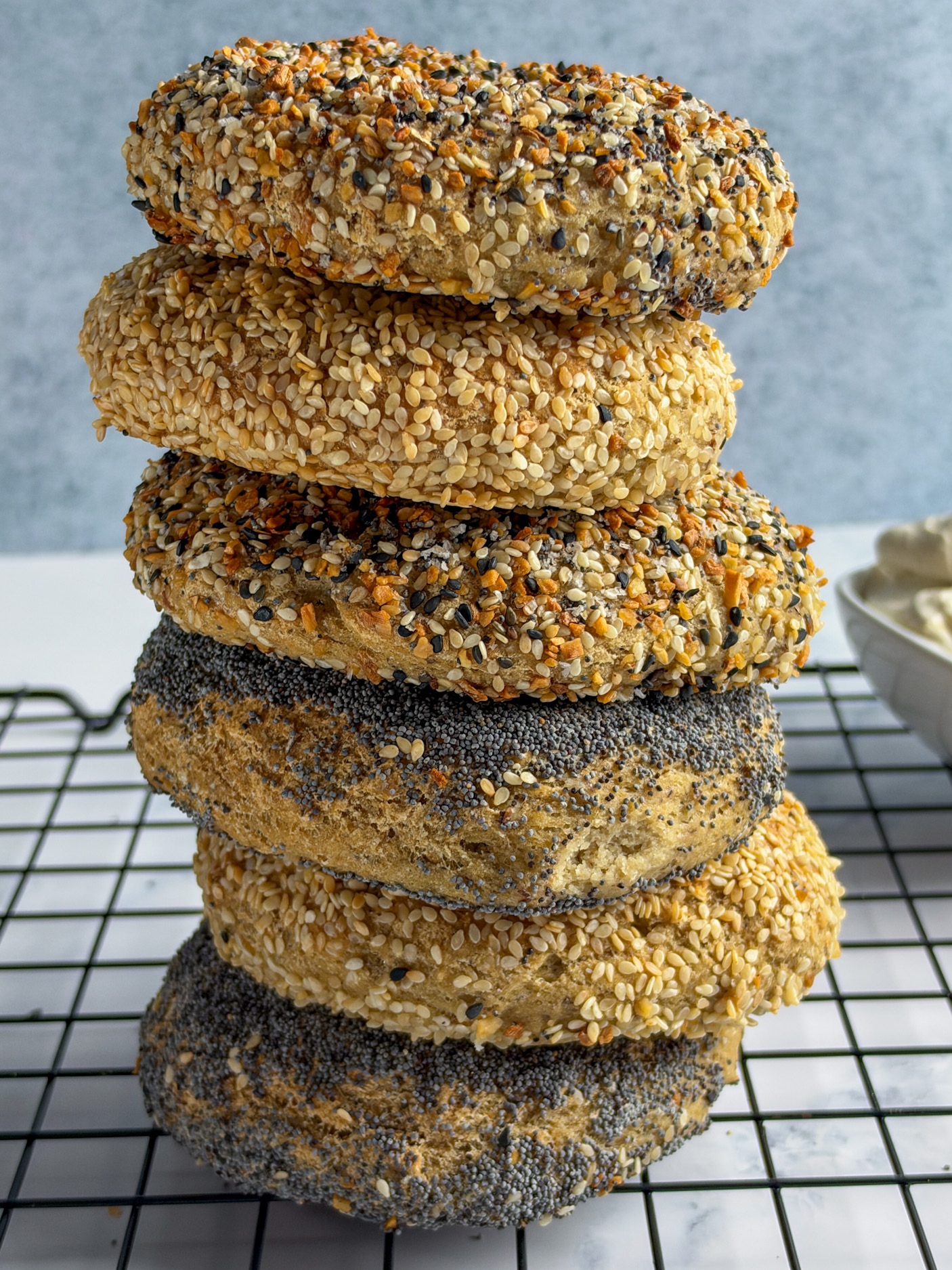
Cool the bagels completely before storing them. Keep them in an airtight container at room temperature for up to three days.
For longer storage, slice the cooled bagels and freeze them for up to one month, placing parchment between the halves if needed.
Thaw at room temperature or toast the halves directly from frozen. Toasting is also a good way to refresh a bagel that has been stored for a day or two.
Frequently Asked Questions
Can I use psyllium husk powder?
I do not recommend it. Powder absorbs water differently and can produce a gummy texture. Whole psyllium husks give these bagels the intended structure.
Why must the bagels cool completely?
Their interiors continue setting as they cool. Cutting them warm may compress the crumb or make it appear gummy and underbaked.
Do these bagels taste like traditional wheat bagels?
They have their own earthy quinoa flavor and a more rustic texture. Toppings and toasting make them especially satisfying.
Related Recipes
Gluten-Free Quinoa Bagels Without Yeast
Ingredients
- 2 1/2 cups quinoa flour
- 2 teaspoons baking powder
- 1/2 teaspoon baking soda
- 2 tablespoons date sugar
- 2/3 teaspoon salt, or to taste
- 2 tablespoons ground flaxseed or ground chia seeds
- 2 1/2 cups water, plus a little more only if needed
- 1 tablespoon apple cider vinegar
- 6 tablespoons whole psyllium husks, not powder
- Sesame seeds, optional topping
- Everything seasoning, optional topping
- Poppy seeds, optional topping
Instructions
- Prepare the pan. Preheat the oven to 350°F. Line a baking sheet with parchment paper and set it aside.
- Mix the dry ingredients. In a large bowl, combine the quinoa flour, baking powder, baking soda, date sugar, salt, and ground flax or chia. Keep the psyllium husks separate.
- Make the psyllium gel. In a separate bowl, combine the water, apple cider vinegar, and whole psyllium husks. Let the mixture rest for 5 minutes, until it develops a thick, gel-like consistency.
- Make the dough. Add the psyllium gel to the dry ingredients and mix until a uniform dough forms. If necessary, add a little more water to bring the dough together.
- Divide the dough. Wet your hands and divide the dough into 6 equal portions.
- Add the bottom toppings. Place your chosen toppings in six sections on the prepared baking sheet, where each portion of dough will sit.
- Shape the bagels. Place each dough portion over a section of toppings. Add more toppings to the dough, wet your hands again, and shape each portion into a round. Use your finger to make a hole through the center, then gently widen and refine the bagel shape. Add more seeds as desired.
- Bake. Bake for 35 minutes, or until the bagels are lightly golden and firm.
- Cool completely before cutting. Transfer the bagels to a cooling rack and let them cool completely before slicing. Do not skip this step: the bagels need the cooling time to finish setting.
Video
Please Note: I occasionally update my recipes after filming the videos. For the most accurate and up-to-date ingredients and instructions, always refer to the written recipe.
Notes
- If the dough is too wet to free form the bagels, add a few extra tablespoons of quinoa flour.